Why We Pack in Glass (And Why Plastic is Not a Neutral Choice)
The packaging of your spices affects what you receive. We explain why Jiru Mithu Farms uses only eco glass jars — and what plastic packaging is actually doing to your turmeric and moringa.
When we were designing the packaging for HAARIDRA and MULKAPARNI, the decision to use glass rather than plastic was not a branding decision. It was a consequence of asking one simple question: if you went to the effort of growing something without chemicals, processing it without shortcuts, and certifying it through independent inspection — why would you then pack it in something that undermines what you've built?
The answer, for us, was that you wouldn't.
The Assumption Most People Make
Most consumers assume that packaging is passive. That it simply holds the product. That whether something is in glass, plastic, foil, or a paper sachet makes no material difference to what's inside.
This assumption is understandable. It is also incorrect.
Packaging is not neutral. Every material has properties — some desirable, some not — that interact with the food or product it contains over time.
What Plastic Actually Does
1. Chemical Interaction with Volatile Compounds
Turmeric and moringa are both rich in volatile organic compounds — the aromatic molecules responsible for their characteristic smell and, in the case of turmeric specifically, a significant portion of their bioactive potency. These compounds interact with plastic packaging over time.
The mechanism is called sorption: volatile compounds from the food migrate into the polymer matrix of the plastic, and conversely, compounds from the plastic can migrate into the food. This is well-documented in food science literature and is one reason why spices stored in plastic for extended periods lose their aroma.
You may have noticed that a new jar of supermarket turmeric smells strongly, but a half-empty plastic container that has been sitting in your cabinet for six months smells faint. That fading is not entirely about air exposure. Some of it is migration into the plastic itself.
2. Microplastic Contamination
Food-grade plastic is not inert. Under normal conditions of storage — ambient temperature, exposure to light, routine handling — food-grade plastic packaging releases microplastic particles into the contents over time. This has been demonstrated in studies examining water in plastic bottles, oil in plastic containers, and other food products.
The quantities involved are small. The long-term health implications of microplastic ingestion are still being actively researched. But for a product positioned as medicinal-grade and chemical-free — accepting any level of plastic contamination is inconsistent with that commitment.
3. Structural Degradation
Plastic packaging, unlike glass, is oxygen-permeable to a degree. Over time, particularly in warm storage conditions common in Indian kitchens, plastic containers allow gradual oxygen ingress that affects colour, potency, and shelf life. Glass is impermeable to oxygen, moisture, and virtually all gases.
Why We Chose the Hexagonal Glass Jar
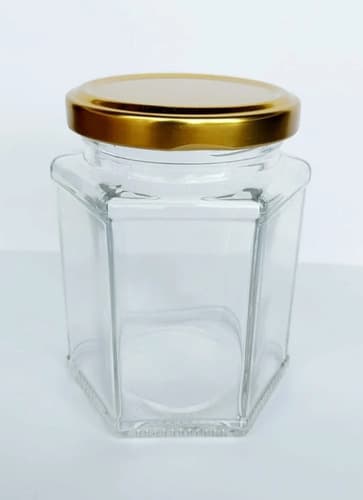
We use a 250ml hexagonal eco glass jar with a gold metallic screw lid. The choice of hexagonal form has both aesthetic and practical reasoning — six flat panels provide more surface area for labelling, the shape is more stable on a shelf than a round jar, and the form is distinctive enough to be instantly recognisable.
But the primary reasoning is the material itself.
Glass is chemically inert. It has no volatile compounds of its own. It does not interact with the turmeric or moringa inside it. What you pack into a glass jar on Day 1 is what you receive when you open it — whether that's two weeks later or eleven months later.
Glass preserves aroma. The volatile compounds in HAARIDRA and MULKAPARNI that contribute to their characteristic smell and potency are retained in glass packaging. Open a jar that has been sealed for six months and it will smell exactly as it did when it was packed.
Glass is thermally stable. Unlike plastic, glass does not soften, warp, or release compounds at the range of temperatures experienced in a typical Indian kitchen.
Glass is reusable and recyclable. The end of the product's life in the jar is not the end of the jar's life. It can be washed and reused for storage, refilled, or recycled. The environmental calculus of a glass jar used ten times versus a single-use plastic pouch is not close.
The Gold Metallic Lid
The gold metallic screw lid is not purely aesthetic.
A screw lid with a food-grade seal provides a more reliable hermetic closure than snap-on lids, particularly after repeated opening and closing. The seal maintains the integrity of the glass jar's oxygen barrier — which is only as effective as the closure that completes it.
The gold colour is intentional brand communication: it signals premium, it communicates the value of what's inside, and it is consistent across both HAARIDRA and MULKAPARNI — making the two products immediately recognisable as a family.
An Honest Acknowledgement
Glass is heavier than plastic. It adds to shipping weight, which in the context of India's delivery infrastructure means marginal additional cost per shipment.
Glass can break. With reasonable handling, it does not — but we acknowledge this is a material difference from flexible plastic pouches, which are essentially unbreakable.
We have decided these are acceptable trade-offs given what glass provides in return. Customers who have received HAARIDRA and MULKAPARNI tell us the jar itself is part of the experience — it sits on the kitchen shelf and communicates something about what's inside before it's even opened.
That matters. Not because of aesthetics, but because the jar is the first thing that signals our commitment to everything else we do at the farm.
The Reuse Suggestion
Once your HAARIDRA or MULKAPARNI jar is empty, wash it out with warm water and mild soap. Dry completely. It becomes:
- A storage jar for other dried spices, seeds, or herbs
- A small vessel for homemade pickles or preserves
- A desk container for pins, clips, or small stationery
- A zero-waste refill container if we offer refill packs in future (planned)
The Bottom Line
We pack in glass because HAARIDRA and MULKAPARNI deserve it. And because you, having chosen a certified organic, lab-tested, farm-direct product — deserve to receive it in packaging that doesn't undermine what the farm worked to produce.
Shop HAARIDRA and MULKAPARNI at jirumithufarms.com India Organic Certified · Jaivik Bharat · FSSAI Licensed · Packed in Eco Glass
Continue Reading
More from the Blog
Why We Pack in Glass: The Case Against Plastic in Your Kitchen
Every major spice brand packs in plastic. It is cheaper, lighter, easier to ship. We chose glass anyway. Here is the full reasoning — and why it matters more than most people realise.
What is Moringa? The Complete Guide to the Miracle Tree — and MULKAPARNI
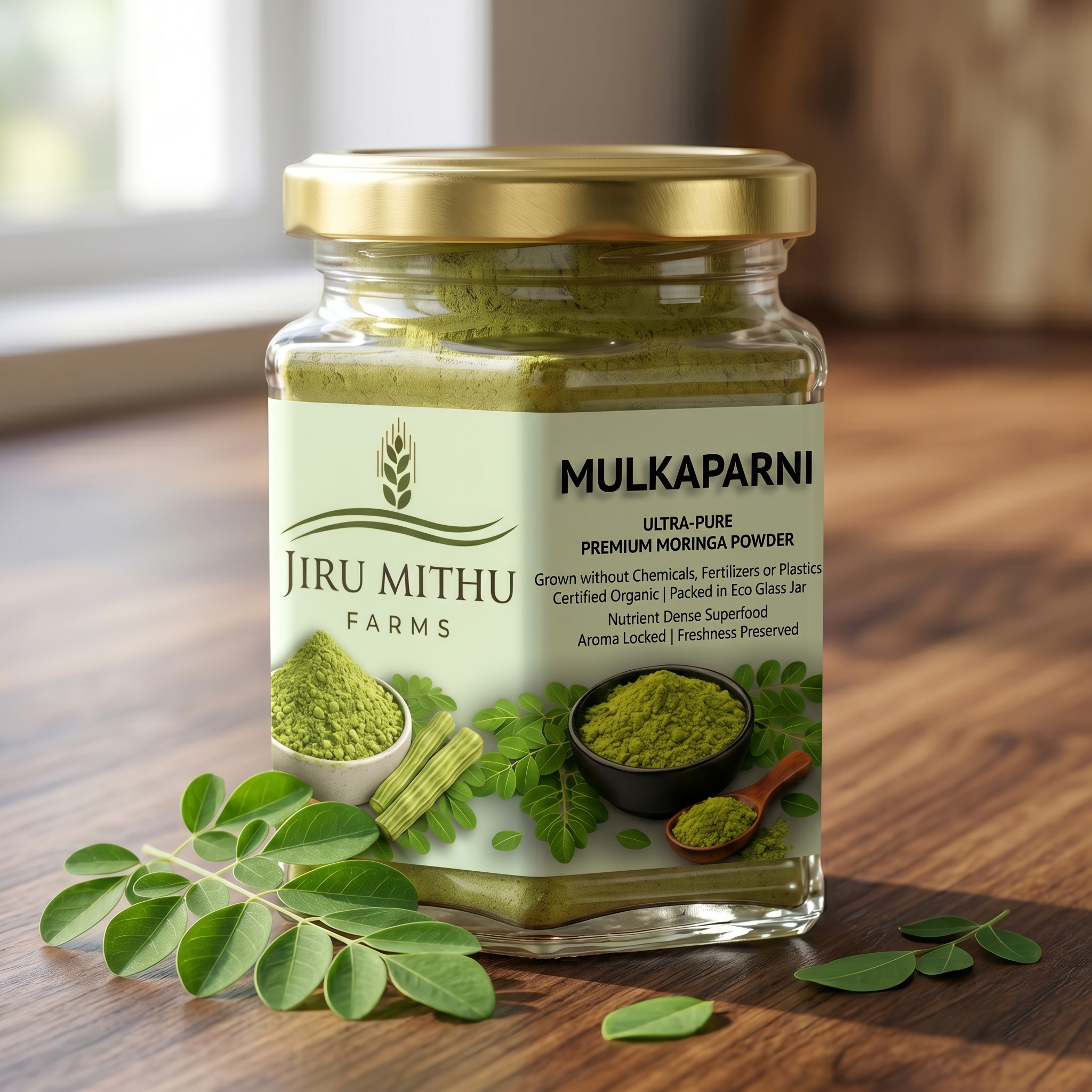
Moringa oleifera — the Miracle Tree. What's actually in it, who benefits most, how to use it daily, and why most moringa powder doesn't deliver what the plant is capable of.
One Spoon of MULKAPARNI: What Moringa Actually Does to Your Body
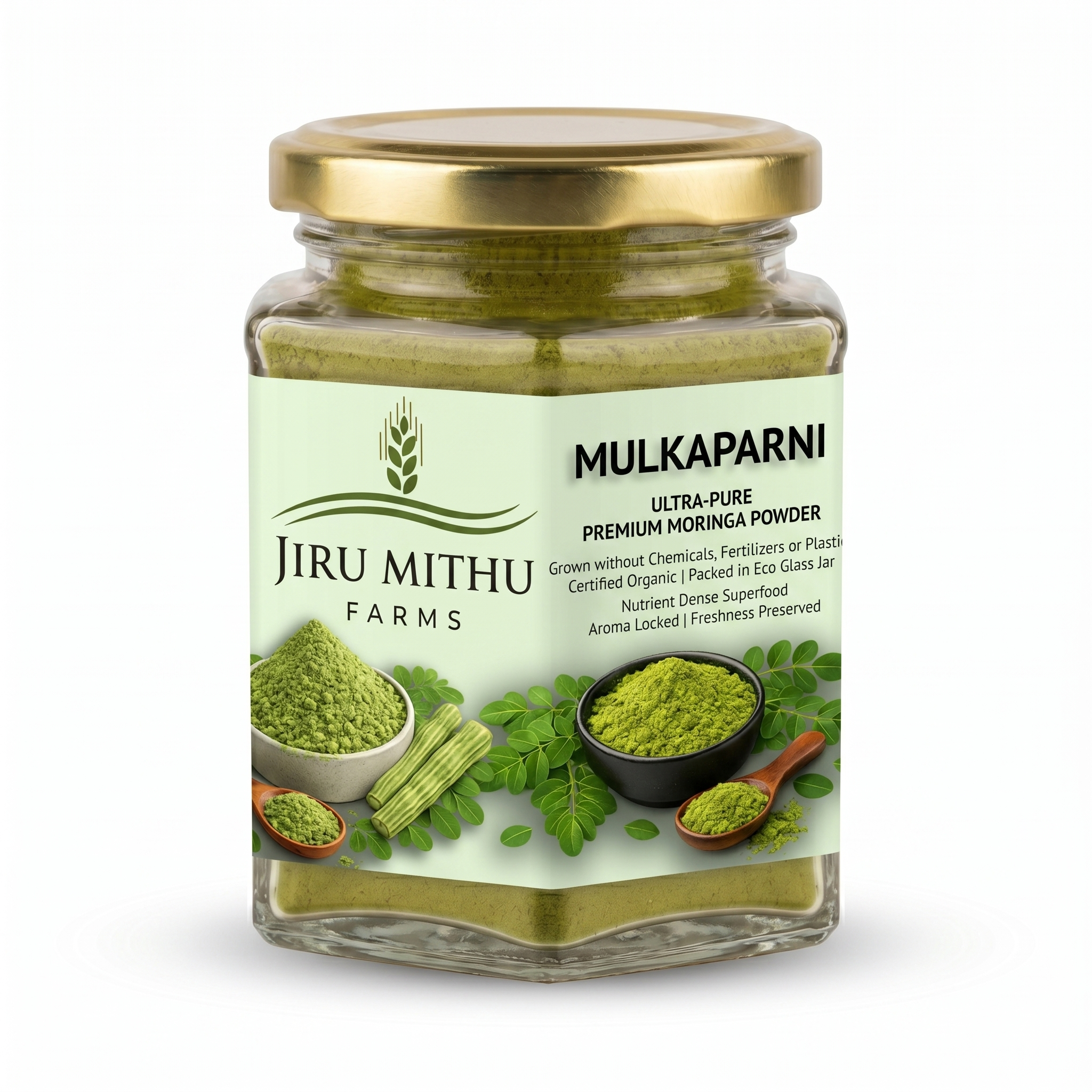
Moringa has been called a superfood for decades. But what does the science actually say? And what does a daily teaspoon of MULKAPARNI actually do — week by week?
From the Farm