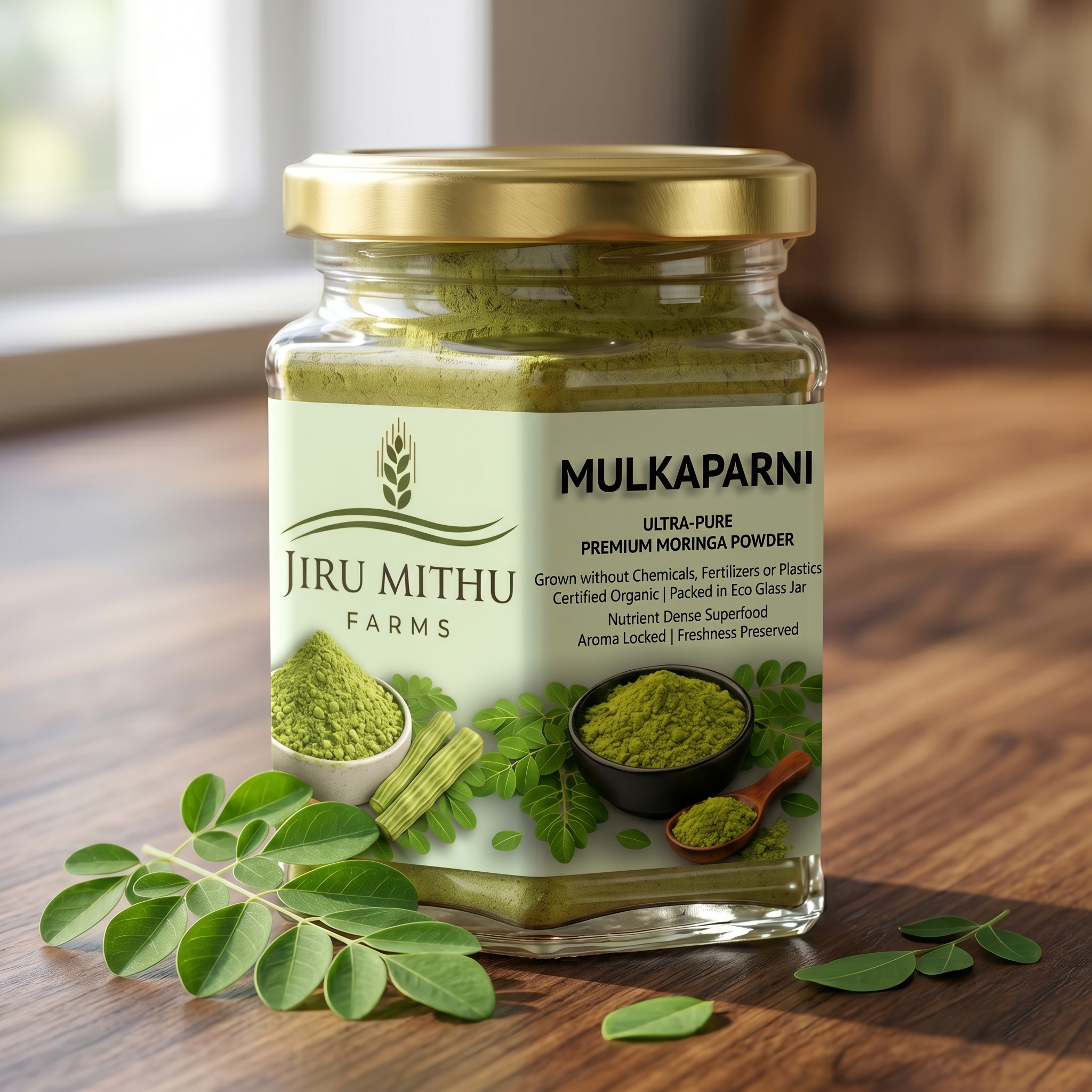
What is Moringa? The Complete Guide to the Miracle Tree — and MULKAPARNI
Moringa oleifera — the Miracle Tree. What's actually in it, who benefits most, how to use it daily, and why most moringa powder doesn't deliver what the plant is capable of.
It has been called the Miracle Tree. The Tree of Life. Ben Oil Tree. Drumstick Tree. And in virtually every Indian language, it has its own beloved name — Sahjan in Hindi, Murungai in Tamil, Nuggekayi in Kannada, Shevga in Marathi, Saragvo in Gujarati.
Every name points to the same truth: this plant has been recognised as extraordinary for thousands of years across dozens of cultures.
But what exactly makes Moringa oleifera so significant? And more importantly — if you're buying moringa powder today, are you actually getting what the plant is capable of?
What Is Moringa?
Moringa oleifera is a fast-growing, drought-resistant tree native to the sub-Himalayan regions of South Asia. It thrives across India, and virtually every part of the tree has traditional uses — the leaves, pods (drumsticks), seeds, flowers, and roots have all been employed in cooking, medicine, and agriculture for centuries.
For nutritional purposes, it is the leaves that matter most. Dried and powdered moringa leaves are among the most nutrient-dense plant foods available — a fact that modern nutritional science has spent the past two decades confirming in detail.
What's Actually in Moringa Powder?
The nutritional profile of genuine, well-preserved moringa leaf powder is genuinely remarkable.
Vitamin A
Moringa leaves contain significant amounts of beta-carotene, a precursor to Vitamin A. Vitamin A is essential for maintaining vision, supporting immune function, and skin health. Deficiency is common in Indian diets, particularly among women and children.
Vitamin C
Moringa is an excellent plant source of Vitamin C — an important distinction, since Vitamin C is involved in immune response, collagen synthesis, and antioxidant protection. Here's the critical caveat: Vitamin C is heat-sensitive and is significantly destroyed by high-temperature processing. More on this below.
Vitamin E
A powerful fat-soluble antioxidant that supports cellular health, skin nourishment, and protects against oxidative damage. Vitamin E works synergistically with Vitamin C and selenium.
Calcium
Moringa leaves are a rich source of calcium — particularly relevant for those who are lactose-intolerant or consume limited dairy. Calcium supports bone density, muscle contraction, and nerve signalling.
Iron
Plant-based iron (non-haem iron) is present in moringa in meaningful quantities. Iron is essential for the production of red blood cells and the prevention of anaemia — a condition disproportionately affecting women in India. While plant iron is less bioavailable than haem iron from meat, pairing moringa with Vitamin C (present naturally in the same plant) enhances absorption.
Plant Protein
Moringa leaf powder contains all nine essential amino acids, making it a nutritionally complete protein source — rare among plant foods. This is particularly relevant for vegetarians and vegans who may struggle to source complete protein from diet alone.
Antioxidants
Beyond Vitamins C and E, moringa contains quercetin, chlorogenic acid, and beta-sitosterol — a range of polyphenolic antioxidants that support cellular protection, reduce oxidative stress, and have been studied for their role in chronic disease prevention.
Who Benefits Most from Moringa?
The short answer is: most people. The longer answer involves some specificity.
Women — particularly those with iron deficiency, during pregnancy (consult a doctor for dosage), or post-partum recovery. The combination of iron, Vitamin C (which enhances iron absorption), and calcium makes moringa particularly relevant.
Vegetarians and vegans — for complete plant protein and iron, both of which are harder to source adequately from plant-based diets.
Working professionals and students — the antioxidant and micronutrient load in daily moringa consumption supports sustained energy, cognitive function, and immune resilience.
Elderly — bone health via calcium, cellular protection via antioxidants, and general immune support as physiological demands shift.
Children above 5 — can benefit from the nutritional density when mixed into food. Paediatric dosage guidance should be sought from a doctor.
The Problem with Most Moringa Powder
Here is where honest discussion is necessary.
Moringa's nutritional profile is impressive. But much of that profile depends on how the leaves are processed after harvest. And most commercially available moringa powder in India today does not handle this well.
High-temperature drying destroys heat-sensitive nutrients. Vitamin C, in particular, is significantly degraded by industrial drying processes that use high-temperature hot air for speed and cost efficiency. If your moringa powder was processed this way, a meaningful portion of its Vitamin C content is gone before you open the packet.
Multi-source blending reduces consistency and organic integrity. Large bulk suppliers aggregate moringa from dozens or hundreds of small farms, many of which are not certified organic. The resulting powder has inconsistent nutrient profiles and uncertain chemical residue status.
Plastic packaging is not inert. Over time, plastic packaging interacts with the volatile compounds in plant powders — degrading colour, aroma, and some nutrients. This is well-documented but rarely discussed in product marketing.
Long supply chains reduce freshness. Moringa powder sitting in a warehouse for six months before reaching you is not the same product as moringa packed and dispatched within days of processing.
What Makes MULKAPARNI Different
MULKAPARNI is grown at Village Vasravi, Tal. Mangrol, Dist. Surat, Gujarat — on India Organic certified land that has never seen a synthetic fertiliser or pesticide.
The moringa leaves are harvested at optimal maturity and dried carefully at low temperatures. This is a slower, more expensive process than industrial hot-air drying. It is also the only process that preserves heat-sensitive nutrients — especially Vitamin C — in meaningful quantities.
The dried leaves are finely milled and packed immediately into a hermetically sealed glass jar. Glass has zero chemical interaction with the powder. There is no plastic leaching, no aroma degradation, no nutrient interference.
Every batch is independently lab-tested. The nutritional profile, heavy metals, pesticide residues, and microbial safety data are all available via the QR code on each jar. Not a generic brand certificate — your specific batch's specific results.
How to Use MULKAPARNI Every Day
The most important principle: small, consistent daily use. Moringa is not a medicine to take in large doses for immediate effect. It is a nutritional supplement that rewards regular, moderate consumption.
Morning smoothie — One teaspoon blended into any fruit or vegetable smoothie. Best consumed on an empty stomach or early in the morning for maximum absorption. The green colour integrates naturally with any green-based smoothie.
Moringa tea — Half a teaspoon in hot (not boiling) water with a squeeze of lemon and a drizzle of honey. A clean, earthy detox drink with a mild pleasant taste. Replacing your morning chai twice a week with moringa tea is an easy start.
Dal and sabzi — Stir half a teaspoon into cooked dal or vegetable curry just before serving. The taste is virtually undetectable in strongly-flavoured dishes. This is the most invisible way to add MULKAPARNI to your family's daily nutrition without anyone noticing.
Roti dough — Half a teaspoon kneaded into wheat flour dough before making rotis or parathas. The green tinge is minimal and the nutritional upgrade is daily and consistent.
Starting dose — If you're new to moringa, begin with half a teaspoon per day. Some people experience mild digestive adjustment in the first week. Increase to one teaspoon after a week if comfortable.
A Note on Dosage and Medical Advice
MULKAPARNI is a food product, not a pharmaceutical. However, moringa has known interactions with certain medications including thyroid drugs, blood pressure medications, and blood thinners.
If you are on any long-term medication, are pregnant, or are considering moringa specifically for a health condition, consult your doctor before regular use.
The Bottom Line
Moringa oleifera deserves its reputation as one of the most nutritionally significant plants available in India. The question is not whether moringa works. The question is whether the product you're buying actually delivers what the plant is capable of.
MULKAPARNI is our answer to that question — grown on one certified farm, processed to preserve what matters, packed in glass, and tested batch by batch.
Shop MULKAPARNI at jirumithufarms.com India Organic Certified · Jaivik Bharat · FSSAI Licensed · Batch-Wise Lab Reports
Continue Reading
More from the Blog
Why We Pack in Glass (And Why Plastic is Not a Neutral Choice)
The packaging of your spices affects what you receive. We explain why Jiru Mithu Farms uses only eco glass jars — and what plastic packaging is actually doing to your turmeric and moringa.
Why We Pack in Glass: The Case Against Plastic in Your Kitchen
Every major spice brand packs in plastic. It is cheaper, lighter, easier to ship. We chose glass anyway. Here is the full reasoning — and why it matters more than most people realise.
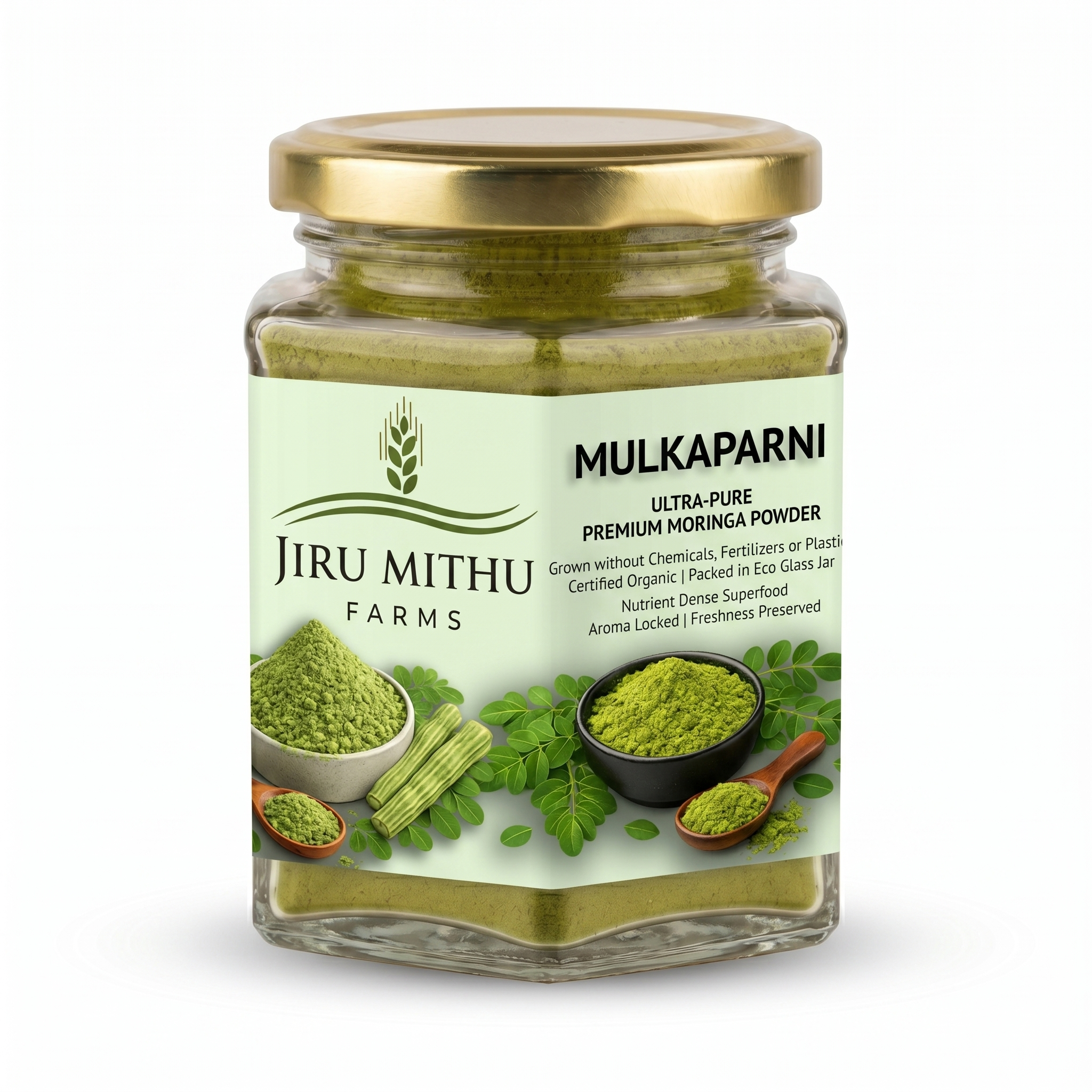
One Spoon of MULKAPARNI: What Moringa Actually Does to Your Body
Moringa has been called a superfood for decades. But what does the science actually say? And what does a daily teaspoon of MULKAPARNI actually do — week by week?
From the Farm